


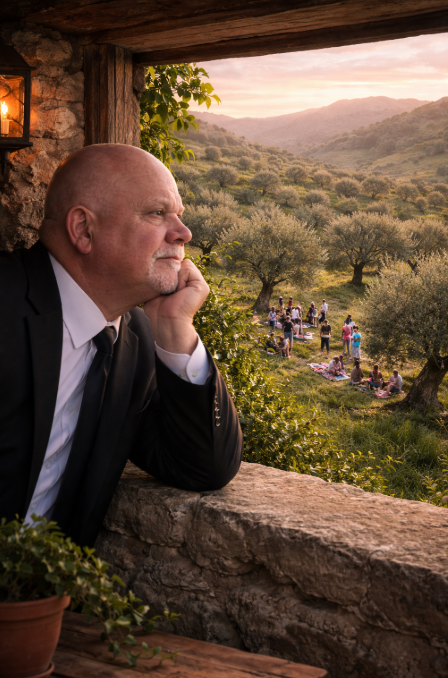
♦ Pasquale Di Lena (Cliccare sulle parole in carattere blu)
Chi è - Who's who
The poems of Pasquale Di Lena
Italian literature
Italian literature, as Gianfranco Contini reminded us, is the only great national literature in which dialect constitutes an integral and indispensable component. This profound truth, too often forgotten in the past or obscured by the persistent prejudice that viewed dialect as an inadequate and “inferior” means of expression, has gained firm recognition in recent decades. This is largely due to the unexpected and remarkably rich flourishing of dialect poetry, which undoubtedly represents one of the most significant and distinctive phenomena in Italian literature during the second half of the twentieth century.
This revival has also rekindled the debate over the very concept of dialect literature, supported by an unprecedented proliferation of symposia, studies, discussions, books, specialized journals, interviews, and critical reflections. For the first time in the history of Italian letters, dialect poetry—now fully legitimized by literary criticism—has been able to compete directly with poetry written in standard Italian, making increasingly significant inroads into major publishing houses and, above all, attracting the growing attention of both readers and critics.
At the same time, dialect poetry has revealed itself to be the repository of rich private and collective themes that transcend purely literary concerns and engage broader fields such as anthropology, psycholinguistics, psychology, sociology, and semiotics.
There are many reasons why so many Italian poets have turned to dialect rather than standard Italian as their preferred medium of expression. These reasons carry literary, psychological, political, existential, and anthropological implications that are both far-reaching and deeply rooted. Contemporary dialect poetry forms part of a broader reaction against the alienating effects of post-war industrial society, a reaction that has entailed the rehabilitation of ethnic history and collective memory, as well as the recovery of personal history and individual roots—dimensions that the impersonal language of the mass media is often unable either to recognize or to convey.
This process also involves the rediscovery of one’s native place—the place of origin—as an alternative to a monotonous, homogenizing, and often meaningless reality.
The poetry of Pasquale Di Lena, direct and forthright, balanced between ironic detachment and moral commitment, belongs to a noteworthy Molisan literary tradition, one that stands comparison, at the national level, with the most significant regional literary traditions of Italy.
THE THOUGHT
The thought
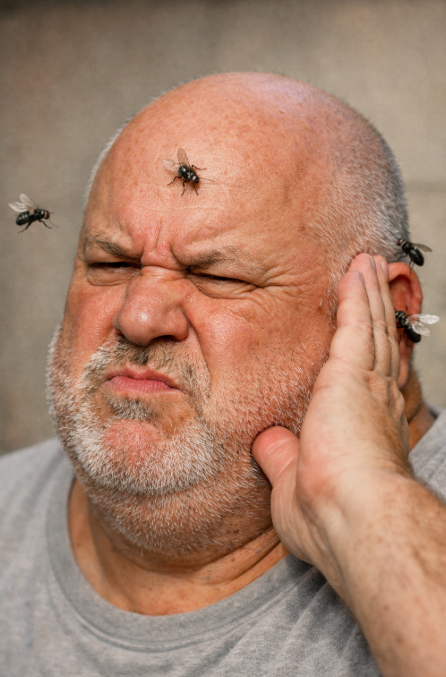
The thought you don't want to think
is a fly
that makes you jump
It buzzes around you
it settles on your forehead
behind the neck
the more you drive it away
the more it pesters you
Whirring louder and louder
first it plunges in your eye
then in your ear
and when you try to catch it
you miss the mark
You end up slapping yourself
like a jerk
for a fly
that keeps right on flying.
1983
A DAY
A day, what's a day?
a few minutes made of so many minutes
a night fallen asleep
the sun shining through
or the song of a rooster that goes cock-a-doodle-doo?
It's nothing compared to so many days
it's a lot compared to a moment
It's a side-splitting laughter
a mass of thoughts and feelings
It's a woven thread
made of memories and hopes
different for those who want to change it
from those who think only of their belly
A day is also the night.
that you get used to death.
BEAUTIFUL
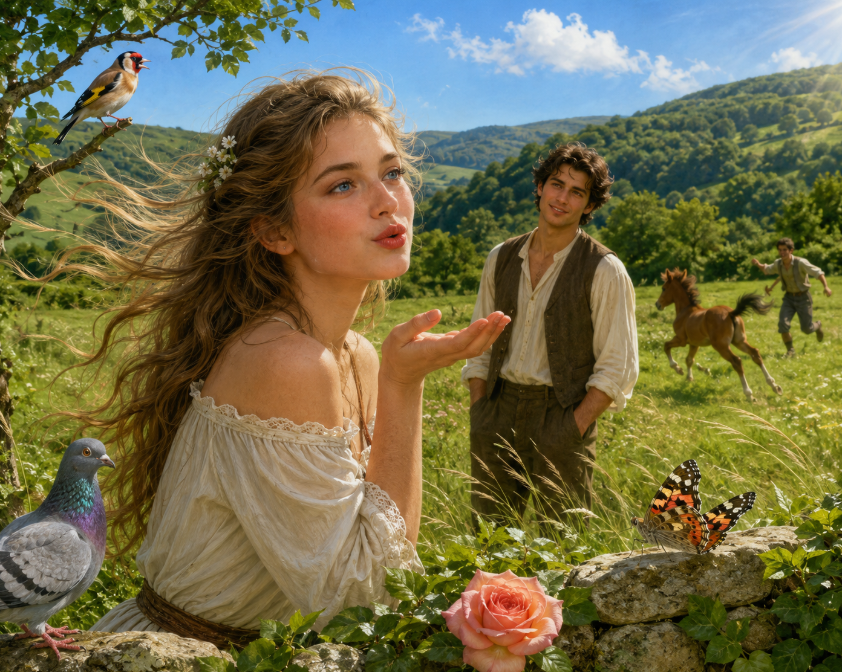
Beautiful,
eyes that resemble the sea
a coral-hued mouth
a nose that crinkles when you laugh
Beautiful
as the word you hold most dear
the morning light
the thoughts that cross the heart
of the lover who cherishes you
A butterfly
that takes to the air and alights
and pairs off and breaks away
A rose
that peeps out of a thornbush
and teases the sun
A sparrow
that hides on a branch
singing his heart out
A pigeon
that stares at you one-eyed
and puffs up his chest
A colt
that runs and kicks
so you can't catch him
A blade of grass
that bends at each gust
but only the sun can wilt it
LIFE
Every instant is a thought.
To be understood
to be able to eat
to learn how to walk
to feel you're dying
and to know others
And cling tight
for fear
of losing mother and father
The fear of making a mistake
the guilt of a gamble
To feel the first yearnings
like an apple to pick
The heart that races
the fear of going crazy
To settle down
the revelation
An old world
made by others
To be with your children
the yearning to make it
the responsibility
To look at the past
to see yourself alone
Not understanding
to feel yourself dying
Death always behind the door
the doorbell rings
and gives you a start
to accompany
you for the rest of your life
without anguish
if you made it your friend.
THE DRUNK
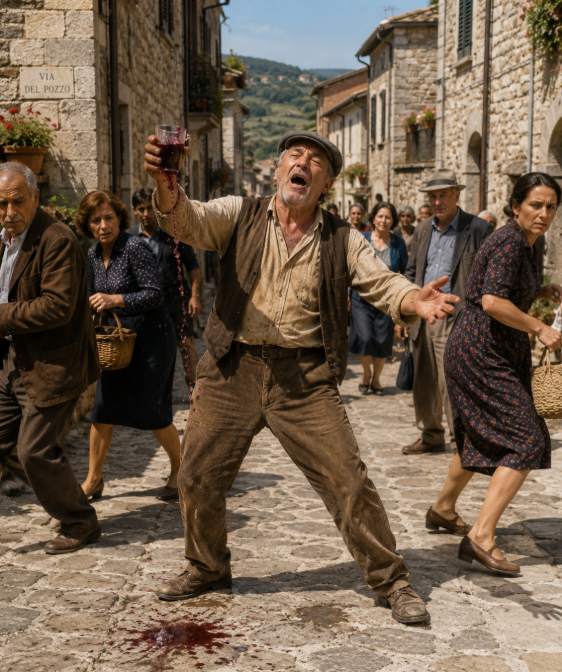
Someone on a bender
can be seen from far off
he walks with his head bowed
his arms a little wide
his legs spread out
For him the road is always crooked
reeling from side to side
You think he'll fall but he won't
Now and then he lifts his head
as if to catch his breath
He is a man alone
who befriended a glass
to forget his cares
As soon as he sees you he starts talking
very quietly at first, then louder
going back and forth
repeating himself
1978
THE SUN AND THE MOON
This weather
is really too much.
you grab the sun with one hand
with the other the moon
to put them one opposite the other
by themselves face to face.
The one pales
and the other blushes.
I feel them trembling
the classic shivering
of someone who's done something not at all nice
I force them closer
to accustom them to look into each other's eyes
and they, while sniffing each other,
shut them
Then I lose my head
I push their noses together
and they quickly take advantage of it
for the longest, sweetest kiss.
There is no way to pull them apart
I give up exhausted
before those two happy faces
finding myself with one hand warm
the other cold as ice.
1978
I'D LIKE TO BECOME MAYOR
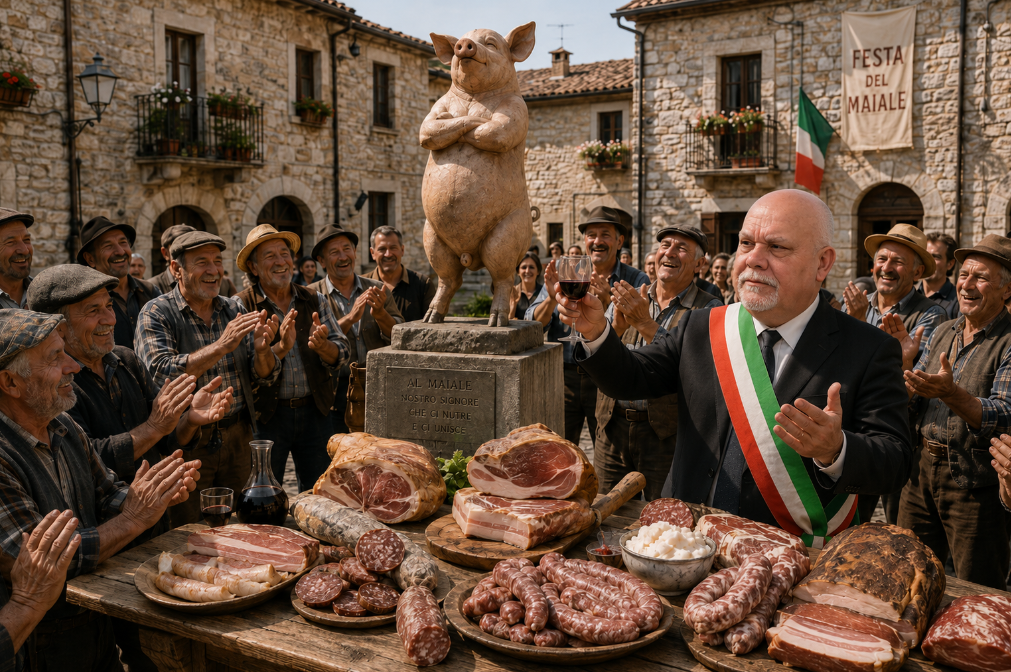
I'd like to become mayor
to build a monument to the pig
Yes the pig
the animal that sacrifices his life
so people can liv
The pig doesn't know old age
because he lives barely a year
he doesn't have time to get attached
to the owner
who any moment now
will do him in
He wastes nothing
because he eats everything and gives back everything
feeding hunger
He is a holy animal
that knows only how to give
fat and lard,
bacon,
dried gut,
sausages, gorge
the shoulder, the ham, the salame
the sopressata, the bristles, the ventrecine
blood pudding, the magnarine²
It fed you, and while it fed you
you felt happy
He was the king of the house
before and after he had lived
that's why there should be
everywhere
a monument
with a curly tail
a mouth slightly open
with the snout raised
as if to tell you
with his rurù rurù
you’re the one, yes you
MY TOWN
lies in a ditch
on a handful of earth
and looks like a ship
Mountains around, Montarone and Mont'Arcano
split open by the valley
furrowed by the Biferno
All nature is full of sweetness
like the blood of the people
who have distant origins
like the green of the olives
that watches Tremiti Islands,
the sea.
The Larinese without olives
is a sad person
filled with memories and longings.
My town
from up on the bridge all the way down
from the Caselle to Seleciato,
from the drinking-trough down to the prison,
Cluenzie Street, the Square, Leone Street
where sleep has no worries
the bird doesn't sing for himself
but for his song;
every dish can be fixed with olive oil
and the donkey is still braying.
Where every cobblestoned alley has a different breath
like people's thoughts.
Ancient hidden treasures
others that are not exploited
or are put away.
My Town
where heat and cold
are seasonal fruits
like the north wind and west wind,
it seems a baby in its cradle,
rocked by olive trees and acacias,
oaks, fig trees and a few elms.
AS CLEAR AS MUD
As clear as mud
To understand so as not to understand
not to understand so as to understand
to understand from not understanding
not to understand you understand.
To understand
not to understand
to pretend to understand
or not to understand
Like the psycho who doesn't want to go to war
or the deaf man who isn't deaf.
But how many psychos and how many deaf men
in this world of cunning
where everything is as clear as mud.
THE SUIT MORE
A suit
can fit tight
or loose.
In any case you can't say
that you can't fit in it.
If it's tight hold your breath,
if loose breathe in.
You have to adapt
to make it fit to a tee,
otherwise: either your pants will fall down
or the bottom will rip.
IN A DREAM
The other day I saw you
as in a dream.
You were running toward me
with smiling eyes,
your face flushed with happiness,
your loose hair blown by the wind.
You looked like an unbridled colt
Standing still like an idiot
I watched you and didn't understand
as you ran with outstretched arms
and pounding heart.
You ran, you ran and ran
without ever arriving.
Tired of waiting I said:
I'd better leave.
NEXT TO THE FIREPLACE
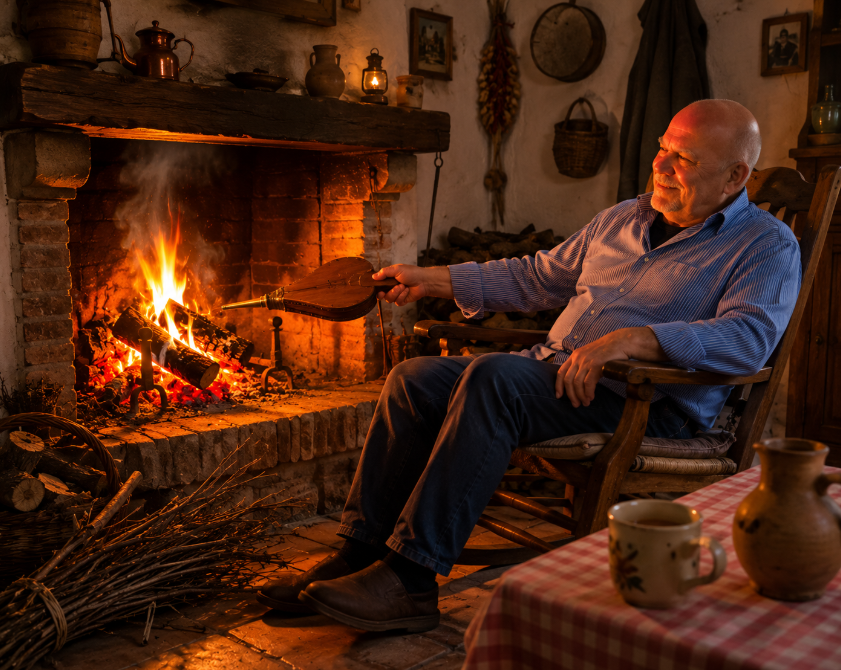
I really think a lot about old age,
I don't know if it's bad or good,
it's a fact though that old age
exists, and it should be understood.
No one knows whether he'll live or die
death doesn't knock, it just creeps in
anyway everyone hopes the heart gets by
and prepares for death in many small leaps.
But that's not the way things are today,
everyone shoots all the ammunition he can bring
anyway, my destiny is to die he says-,
then it's better to live a moment like a king.
In short you're content with a nice flame
that not only has no fire and cannot warm you,
but it burns you, it blinds you, it inflames you
with the cold that takes the place of warmth.
It's certainly not easy to start a decent fire:
first the log, then kindling, twigs and brushwood.
Once it starts to catch it can turn into a pyre.
You see the flame, you feel the heat, it's really good.
When the flame dies the fire is out again,
the log has turned to cinder
that you tease with the poker now and then.
Under the ashes there are always embers.
Around the fire you get to know the past
and have tomorrow all set,
you learn to distinguish a little from a lot,
you don't sit on your hands, there is always something to do
you understand that there isn't just today, but old age too.
THE LITTLE HOUSE OF SAND
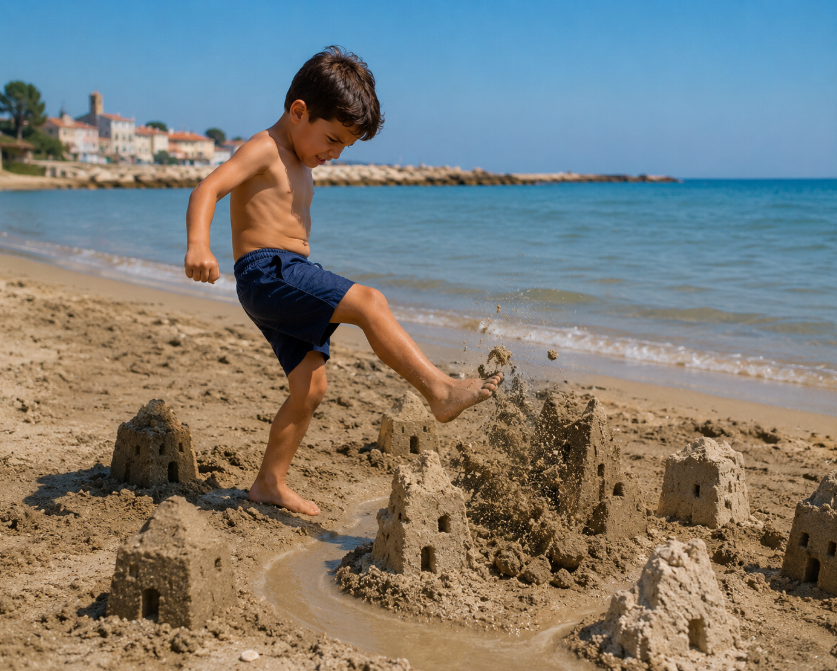
I remember as a child to the sea
I used to build houses with sand
and put my heart in it.
I looked at them over and over
and felt I was really good at it.
I'd walk around them several times
to see if there was anything missing:
a door, a window, a little street.
Then they would change color
as the water dried up
and little by little the wind
would snatch a piece away.
At first I would run to patch it up
but then I saw it was all crumbling,
and so I would give them a kick and demolish them.
Angry tears would come down
and everything seemed an ill omen.
Growing up I've come to understand
that a house needs foundations to stand
if you don't want to see it disappear in a second,
how then can you build it on sand,
where everything lasts but an instant.
THE OWL
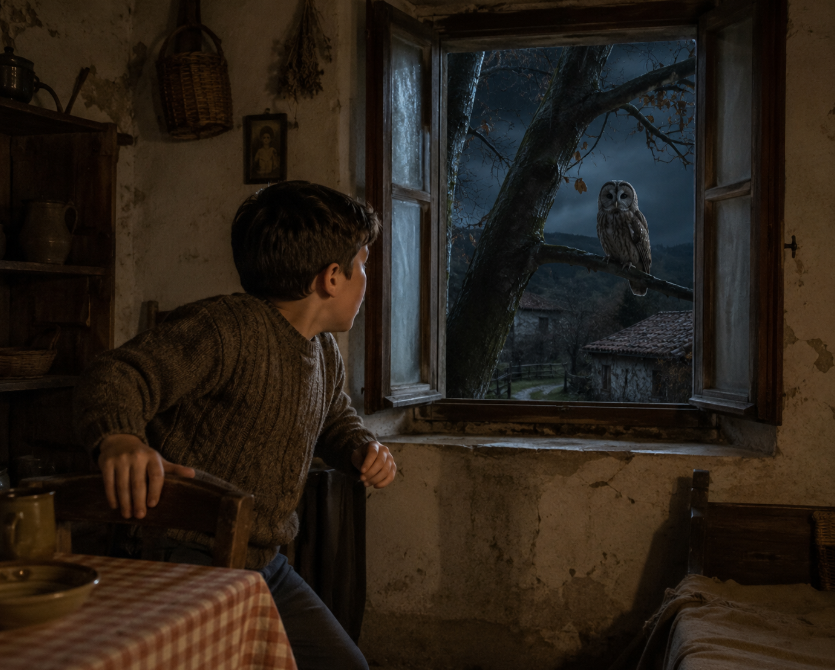
As a boy they taught me
to be afraid (among so many things to fear)
of the owl, bird of ill-omen.
"Who knows who he's hooting for"
said the women, crossing themselves.
He was the lord of the night,
and if he sang and cried nobody knew.
In houses full of children
misfortunes are nothing new:
poverty, hunger, by God's will,
now a death, now someone ill,
now an accident at work,
now a family thrown into the street.
Always the bird of ill-omen's fault,
that never missed,
wherever he looked he hit the mark.
People cried, tore out their hair,
they screamed and then started over.
World never changing for the hopes
that never reached heaven
because of the owl that hooted.
SUMMER NIGHT
During the few hours summer nights have
I enjoy going out into the street
to breathe the fresh air
to hear the town sleep its ancient sleep,
where scops owls and crickets answer
in time, with a hoot owl that sings,
the cat that miaows, the dog that barks.
The drunk looking for company is talking to himself.
You can hear snoring from an open window,
a trickle of water makes a cheerful sound,
the bell tolls every quarter of an hour.
Every step you take echoes in the street.
The air is still, hot and unbearable,
and after a while you reach the Bridge
where it's a little cooler for the breeze
that brings a smell of open fields.
Even when asleep life has a sense
with rest that lets you gain your strength,
with a dream you have that makes you live
with a light thought for so many things
like the one, lovely, of Annarosa' a kiss.
THE MOTHER
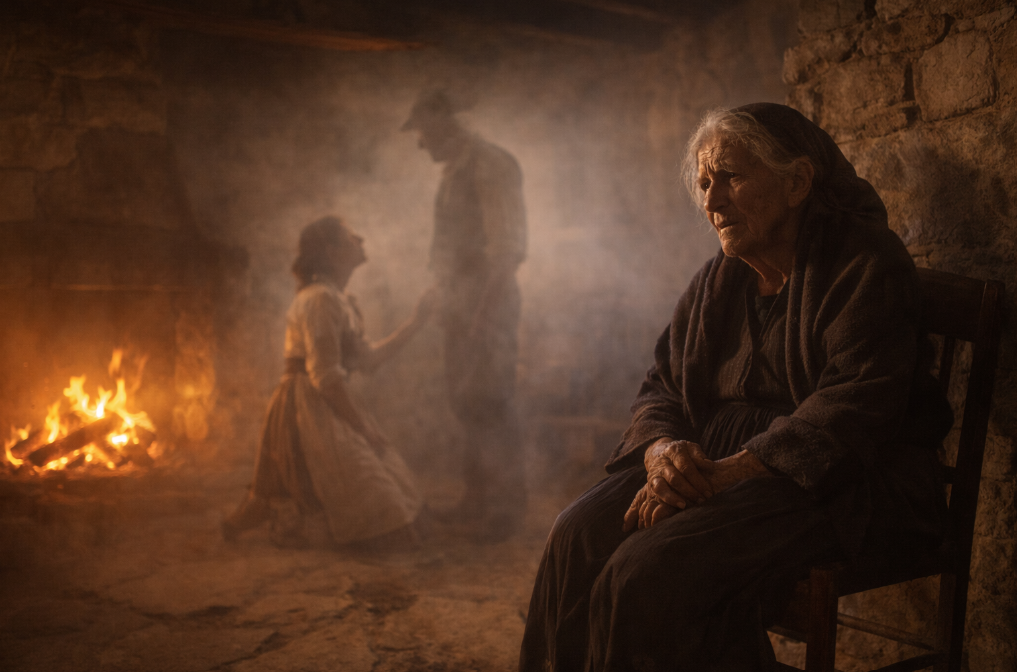
The mother
Do you understand, daughter?
You have to learn to clean the house,
make soup
and sew,
wash and iron clothes,
do the shopping and save.
To know who the children are
when they are big and when they
are small,
the way to make a man happy,
always full of worries,
of cares,
dead tired from work at home he looks
for rest and comfort.
Before I forget,
it's very important to know how to clean vegetables.
When you feel like talking, listen to me: sing
if you want people to say you're a nice girl,
a good wife, a virtuous mother,
what they call a woman
yes, a real woman
a woman of gold,
a woman.
THE DAUGHTER
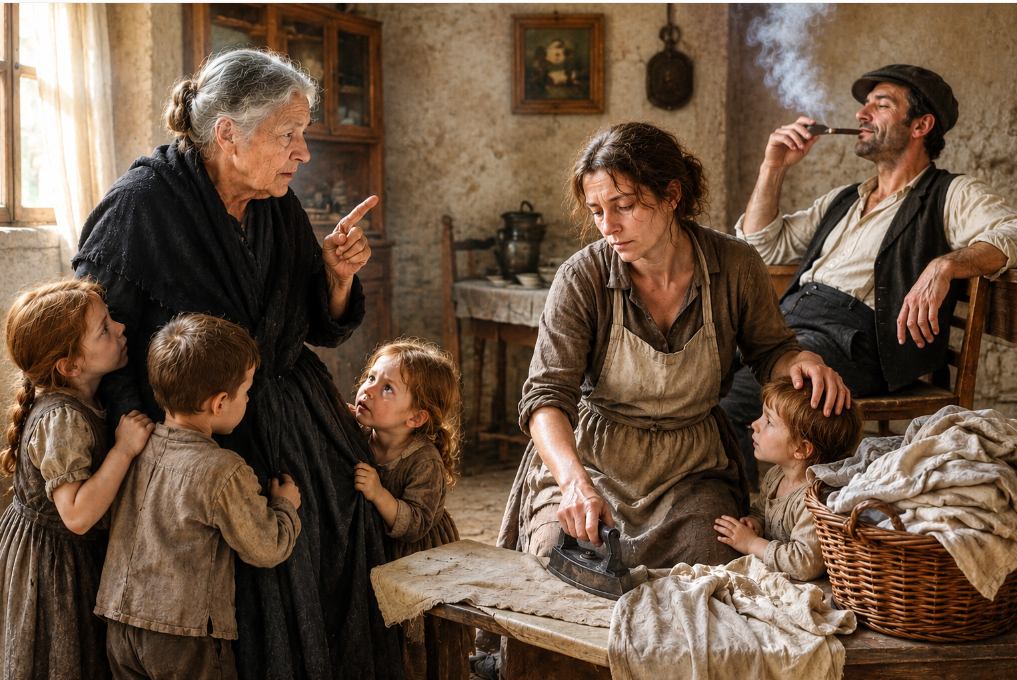
The daughter
Maa... Maaaaaaa!
I can't live with you any more,
the same old story day and night
yap, yap, yap:
a nail, a torture.
You've been a servant
and want me to be a servant too.
Always with the apron on my lap,
with my head down
never a word, quietly
on my knees before a man.
To shed my tears in silence
ready to say yes
to forgive and console,
without thoughts or pain,
weariness as happiness
to find myself old and tired
without knowing why I've lived.
No ma, no,
no way, forget it,
because I'm here too
and I too want to live
with a man who has to respect me.
THROW-AWAY
throw-away
you make besard
Who in the world can understand it
as soon as you get something you throw it away,
a thought passes as soon as it comes your way,
constancy is a rare virtue.
The rule is to keep on changing.
Is the suit new? It's thrown out too,
and so is the refrigerator, the bed,
the car, the radio, the television
to buy another one and then
throw it away again.
Life has become a garbage heap
where one can barely find company
one throws away mother, father and friend,
casually, only to follow a trend.
And so one company for another company,
one friendship for another friendship,
children, brother, sister and whoever else may be.
These are terrible times
a real curse
that make people sad
in search of worries.
The stench slips inside you
it clouds your head like heavy sleep
and almost no one has sentiments,
vocation, principles any longer.
Only the glutton and the swindler
are laughing it up.
The blind speak to the deaf
and the deaf teach the blind.
They all get mad
and curse St. Anthony
instead of talking they bark
and you slowly lose all desire.
The remedy is to look around
with your eyes open wide
your ears picking every sound
and to stay awake night and day
so as not to go back, but forward
so you won't hear them say
"Some live, some die"
or "those were the times!"
With garbage you make manure
with manure you enrich the soil,
with a rich soil you make bread,
with bread you live without hunger,
without hunger you eat,
with thoughts you can grow,
by growing you get strong
so nothing's thrown out
but everything is used, enjoyed
and is also felt.
To feel means to live
to live without getting drunk,
to chat with a hug,
to sing holding each other
without knowing who's on top
or who's tumbled under.
Florence 1974
HEART POUNDING
As soon as I see you
my heart starts to pound
I almost can't believe
that this can be love.
And fortunately even if it accelerates
the beats are regular
like a damned machine.
To keep it this way
I'll need a jar of blood
a ton of madness
and a vat of time.
But what! you still don't see?
Then it can't be
this way it's all over
and I'll put it to rest.
But on one thing I have to be clear:
if the deaf man is deaf
or just turns a deaf ear
playing smart.
Is he deaf? Pity the man.
Is he smart? Pity the sucker.
Pound, my heart, because it's spring
over the roofs the swallows are flying
the day is warm and cool is the evening
and you sing at the top of your voice.
THE BREATH OF SO MANY PEOPLE
Cold in winter
heat in summer
one on top of the other
never enough to eat
always hungry.
Around the fireplace, the flame,
with roasted fava or ceci beans
with the fire-shovel and bellows
always teasing the brand
tic-tic-tac like a game.
With the pot babbling, my grandfather
telling stories
and the fire crackling.
You'd get burned in front
and freeze behind.
Childblain and heat spots,
in the cold bed
that the warmer didn't warm
and the brick or bottle burned you
the chilled sheets embraced you.
The only warmth was the breath of so many people.
In the summer open doors
the jug with cool water
your head shaved, chatting
barefoot outside the door
a blanket on the ground
and a great hunger to breathe.
THE HEN LAID AN EGG
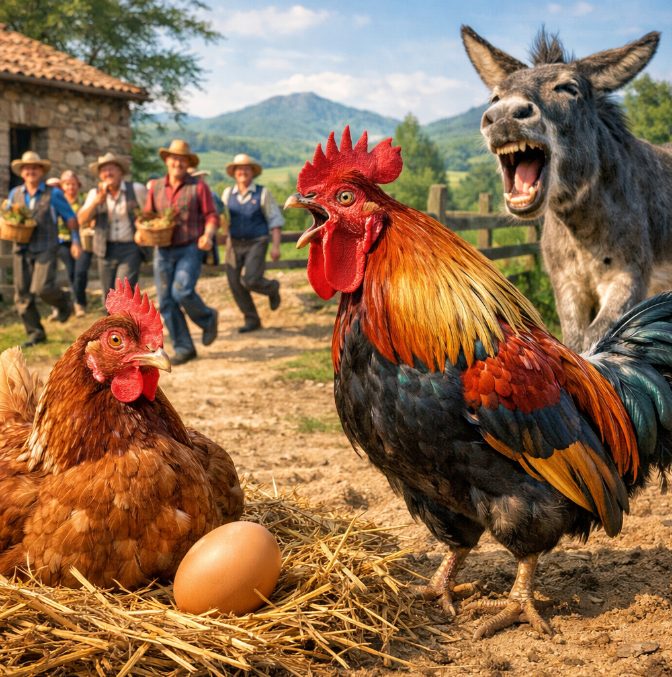
The hen laid an egg,
and the rooster crowed
that's how it goes someone does something
and someone else takes credit for it.
When I hear me, me,
you can be sure he didn't lay an egg
but he believes that the egg is his.
There is too much crowing
and that's why the jackass brays,
digs his heels in or gets mad
and if he walks, while walking
he finishes the hay.
THE LION AND THE ANT
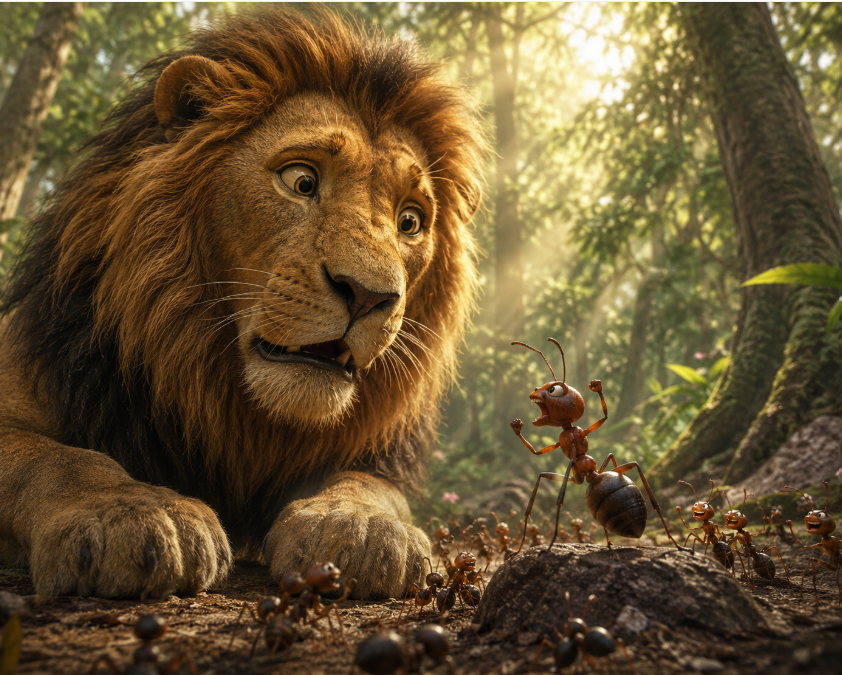
The lion and the ant
So,
what are you doing all alone?
the lion said to an ant
So what,
can't I be alone for once?
answered the ant in a hostile tone
Oh...so, the lion was angry what's this?
Is this the way you talk back to me?
Don't you know that I am a majesty,
in other words the king of all animals?
Anyway you were born to be with others,
so, child, you can't do anything you like.
Freedom? Try to be happy with what you got
and don't forget that I'm in charge here.
Majesty, is it true that you're always alone
and when you find a mate you eat her?
and you never let anyone know about this big problem of yours?
Now you found me and complain!
You know what?
The happy animals
are the ants
and not those that are alone like you
who are unhappy even though they're kings.
THERE ARE TIMES
There are times
everything you do is useless.
You can bang your head against the wall! all you want,
you'll only hurt yourself.
It's like knocking on a door
when there's no one there
or no one wants to answer you.
You wear out your knuckles,
without getting anywhere.
Listen, come back tomorrow, knock
one, two, three times,
wait one, two minutes
and if someone asks you:
"Who is it? "You answer:
"It's me." Room
THE NEW FOUNTAIN
It gave water to the whole town
Cool water in three jets, at every jet
a row of jugs, barrels and vats.
In the heat and the cold
there was always a line of women
who waited their turn to fill
chatting and arguing,
with a thought to their house,
their children, the pregnant jenny, their spouse.
The carabinieri, the attorney, the prison
the hospital would fill as soon as they got there
while the women fumed
for the abuse of authority.
Now the water is in the houses,
and this is a good thing,
the New Fountain doesn't run anymore,
no one thinks about it.
If it still ran
and you had to stand in line,
today even the authorities would have to do the same.
MARCH WEATHER
Raise your arms and stretch away
to shake off lingering sleep
Open the window to see the day,
breathe the air in deep
and open your eyes to that dazzling sun
that makes the leaves glisten
and turns the glasspane into a mirror.
And for no reason you think back
at when you had fun
shining a glass at passersby, making sure
that they couldn't see you even if they looked.
You laugh about it for a while and go back in
to get ready for the day before the mirror.
Once you used to play with a piece of glass
and pretended to look at yourself,
because you didn't care about others,
what mattered was going out into the street,
to meet a friend and start a game on the fly
until your mother called: "it's ready to eat."
Now you use the soap that made you cry,
you shave, put on some perfume, brush your teeth,
check your shoes to see if they're clean and complain
if your pants have no crease, the shirt collar isn't straight.
These are important things that can spoil your day.
On top of everything else even the weather is acting insane
and you realize it when all dressed up you step out the doorway
and see black clouds racing across the sky like crazy,
pushed by a breeze that rises instantly
and shakes the trees, plucks the flowers, rocks the grass,
raises the dust, and at first the raindrops fall slowly
then faster, and instead of cursing you swear
that that weather is March weather.
MEMORY
What good times that day
what happiness that time.
How many fine days
when I was a boy.
Ehi, what about the pains?
Those I don't need to remember
they'll have to come anyway.
BEAUTY
Pick the rose, Concè
it's beautiful, too beautiful.
But watch out for the thorns.
I know that you know
everybody knows,
but those who don't get pricked are very few.
YOU'RE SO BEAUTIFUL
You're so beautiful,
when you laugh with your eyes.
You look like a rose
dripping with dew,
a stream flowing through the underbrush,
a green countryside,
a sun that warms without burning,
a full moon rising,
a goldfinch on a branch.
You're beautiful
when you speak with your heart
You seem a music
coming from afar,
the song of a nightingale,
a silence,
a stream that looks still,
a falling leaf,
the evening of a night full of stars.
You're beautiful and dear
you're all my heart
blackberry eyes
cherry lips.
HEAT
A smooth snake
Slides over my legs
An ant tickles my foot
Two flies
Sting me and take off
The side of a tree shelters me
From the sun.
Two goldfinches are making love
Farther on the cicadas sing.
The thirsty brook rubs against the rocks
With one eye closed
And the other drooping
I feel my head tilting
on my chest
And start very slowly to doze off.
HOT WEATHER
The heat makes you weak
makes you feel like doing nothing
it brings drowsiness, a nap,
and only a breeze can make you happy.
The whole world seems asleep
even the stream makes no sound,
leaves and grass are still
and just as still is the desire to make love
The silence rocks your sleep,
you're awakened by your dry lips and sweat
ending a dream that is always great
with so many scattered stories.
And yet there are noises,
the cicada never tired of singing
the call of the fledgling sparrow to his mother
and the one next to you
who keeps on snoring.
MAY
May
Now is the season for roses
and cherries,
for woods full of leaves,
for fields without soil
but green with patches of red
and light tones of yellow.
It's the season
of first nests and first flights,
of the first warm sun,
of hearts in love.
It's May,
the most beautiful month,
beautiful as a pregnant woman
who calmly waits.
It's the month of spring
and, without knowing why,
you just want to sing.
THE SONG
One who sings at the top of his voice
is venting the anger he has inside
So he sings and finds solace
and the strength to wait a while
He waits for daybreak to see the sun.
he waits for sleep so he won't have to think
One who sings softly
has a heart in love
and the song is like a call
of words that won't come out
The day has the color of wheat
and the night is a golden blanket
JULY
His forehead is dripping sweat
the breeze brings the heat.
The sun is straight up,
the poor devil gets burned.
Around a wild pear tree
a pack-saddle, a jug and
a knapsack.
A horse
shakes his tail and eats
a kite crosses the sky and shrieks.
The peasant stops working, he wets
his dry lips with his tongue
wipes his sweat with his handkerchief
and sets off leaning on his stick.
THE SMELL OF RAGU
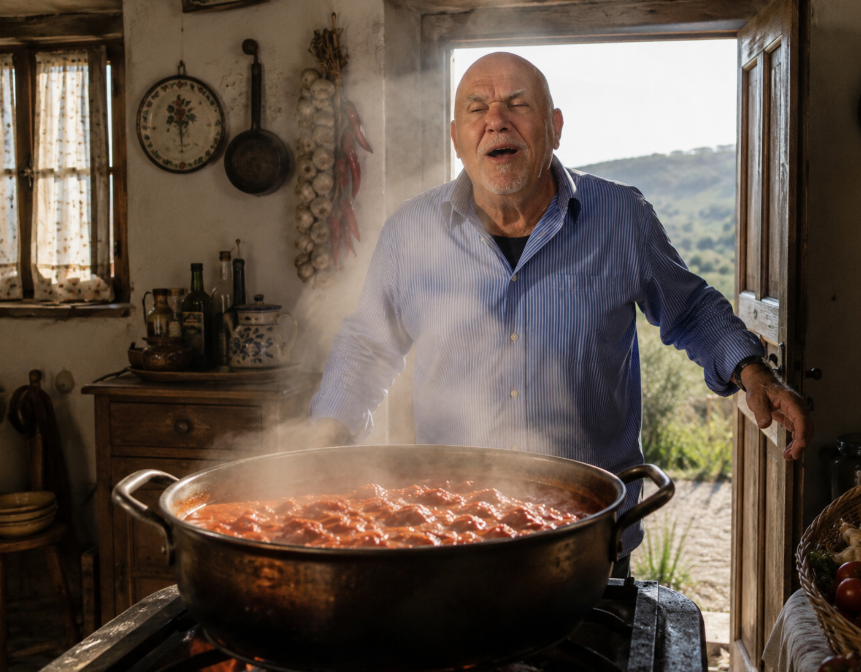
God what melancholy
the funny thing is
that it always comes at this hour.
The professor speaks
and I don't understand.
I go back home
feeling even gloomier.
I'm about to go in...
suddenly it passes:
but how come
weariness, sadness
have disappeared?
Now I get it,
that's it,
yes that's it:
the smell of ragù.
TIME
How fast time flies
when you want to stop it.
It seems like an ill wind
that won't let you catch it.
Without realizing it
passes
and leaves you a soft caress.
Oh, I'd give anything for that voice,
for those caresses.
Then one day you have nothing to do
and feel time on your back
that presses down and buckles your legs.
Your head spins.
and you don't know what to think
as soon as you think,
you see that time is standing still,
while you want it to fly.
It looks at you with two dry eyes
with two ears
that are deaf and long
with a mouth
that's toothless and empty
with a naked body
without strength
and it seems
to want to say: "I
give so much, so much, but nothing
when someone wants to look at me".
BY THE SKIN OF MY TEETH
By the skin of my teeth
I made it
but what suspense
what anxiety!
By the skin of your teeth
you won't live long.
Too much anxiety.
To live
one either shouldn't think about things
or should be prepared.
If you don't think of something
it doesn't exist.
If it exists and must be done
it's no use waisting time
thinking of the poor or the rich
to get to the last moment
by the skin of your teeth.
MONTARONE
Every time I come back
I look out the balcony
to see Montarone
By now it's full of houses
of white and red buildings
so you can't recognize it
I close my eyes
to see that mountain
again round
as a mare's back
that could show you
the first light of the sun
the first snow
the first colors of spring
Right at the summit there were
four or five slender elm trees
stripped of leaves, that seemed
so many planted fish-bones
Only three cypress trees, always dressed,
are left now in the curve
that in the summer
play at hiding the moon
and when they let it out
it's a poker card drawn slowly.
WHAT DO YOU THINK ABOUT?
What do you think about, pretty girl,
when you sleep days
and stay awake nights
and count the silence?
What do you think about, tell me, what do you think
when your eyes shine
your heart pounds and your body trembles.
What do you think about, tell me, what do you think
when your head explodes
and you feel like dying and your heart stings.
Maybe you too think
of two absent eyes
and of someone who doesn't think
and a heart that doesn't pound.
THE STAIRS OF ST. STEVEN'S
When it's night in the summer
I like to sit
on a staircase
with a starlit sky
and the warm air.
Leaning on my elbows
I keep my shoulders up and I feel
the gentle kiss of the icy wind
through my unbuttoned shirt.
With my head between my shoulders
I count the stars one by one
a fly bites my dry lips,
a firefly goes on and off,
a cricket chirrs far away
the howl weeps,
a dog barks to another dog barking,
a hoot owl marks the hour
and time is standing still.
LONELINESS
loneliness
How horrible to live
without a penny
or a piece of bread
with a poverty
you can cut with a knife,
without even a pair of eyes with which to weep.
Even more horrible is to live
without joy and hope for the future
with your desires, the times you've been cheated,
burning time,
beating your head left and right,
alone among so many people,
more than fed up
A lone tree is carried by the wind.
A lone tree does not make a wood
and withers with time.
Now everyone wants to learn to be alone
instead of learning to be with others
and fight and change with others
exchanging thoughts and bread
to live like men.
THE WIND
The wind
depending on how it blows and when it blows
can delight you
or bother you.
Think of the west wind
how cranky it is or the Majellese
when it cuts your face.
Different from a breeze
that refreshes you
or caresses your skin
stirs the grass
makes the leaves murmur
cleans the air and the sky
and lets the butterfly rest.
HUNGER
Unless you go through it
you can't understand
what a terrible thing hunger is.
It bites your stomach
it makes you see fireflies
it buckles your knees
it clouds your brain
it chills you to the bone
and you can't get warm
because you don't even have clothes.
Hunger.
What a bitch!
It makes you rage inside
it turns you into an animal
that bites those who are hungry
and licks those who have it all.
THE FIRST TIME
Only after I go in
I stop trembling
Lying on the bed
she turns and says hello.
She is so beautiful undressed
that I don't think of the others she's had.
I come closer, I touch her, caress her
I say a few words of love
but she doesn't hear or understand.
Meantime
I wipe off my sweat,
glove put the money on the nightstand
because you pay beforehand,
I get undressed starting with my jacket to hurry
because she'll be busy by and by.
She moves with studied gestures
she whimpers as if about to die
like one who is sure
to make you come right away.
I'm finished, it's over,
an I am immediately sorry
to think how unclean
is the love that you pay for.
OLD AGE
Stop it now, grandpa,
you're acting like a child.
I have things to do
I have to go...
Are you angry at me?
What did I do?
Here, have an almond.
Oh, yes, I'll have to break it for you
And he, with tears in his eyes,
Said very quietly:
“To think that when I was young
I could break almonds with my teeth”.
THE LITTLE VIRGIN
Listen, come here
I have to tell you something,
something beautiful, wonderful
that happened to me a while ago.
He showed up handsome, tall,
light eyes
and fleshy lips.
I'm still all breathless,
still excited
...but what a feeling!
Two shoulders…. he looked like a dresser,
a chest like a statue,
handsome from head to toe,
he made me want to feel him all over me.
I stared at him straight as an arrow,
he answered with a little laugh
grabbed my hand and led me away
and I found myself under a bush,
lying down.
Strike me dead,
but I couldn't help myself
I screamed out loud for the pain
as if someone had split me in half.
Then moans and sighs, loud ones and soft ones.
A fire was coming out from inside
and from outside a fire was coming in.
I think my heart melted
My brain without thoughts
My mouth dry
My breasts hard as stones
Nipples that as soon as you touched them
Another fire flared up.
Mother of God!
My heart’s still pounding
And my face is burning,
In short up and down
Side to side
I squeezed with my hands and legs
Toffel that brazenface better
Ho wonderful it was!
It was something
You can’t imagine
And seemed an eternity
Then a sigh, a sigh
longer than the one before,
I squeezed tight
and the rest I can't remember.
Listen, you seem strange,
you look pale
but you don't need to worry,
I only made love.
TODAY IS ALREADY TOMORROW
Yesterday or the day before,
tomorrow or the day after,
today or another day
doesn't mean much.
Sooner or later it will happen
there's nothing you can do about it,
you have to resign yourself.
Oh, you're out of your mind!
This is the philosophy
of someone who doesn't want to live
or doesn't know
that wheat doesn't grow if you don't work the soil
water can't come out if there's no hole,
things don't change
if you don't move
and if you resign yourself
you're left alone like a jackass.
Lets see instead what's to be done
to convince others.
Strength makes strength,
night engenders another day.
Forget resignation!
You need a revelation!
PEPPINO THE CRIPPLE
They called him Peppino the cripple
and he didn't get mad
because he was born that way
He had a fine singing voice
and when he laughed he drew you along
filling you with gentle lightheartedness
When he spoke he was a hard nut to crack
he made sense when he talked
and he knew a lot.
He limped only when he walked
and those who didn't know him
were sure to jeer behind his back
Peppino, Peppino the cripple
sharp, clever, quick
even capable of giving you a kick.
THE MOON BEHIND THE WELL
The moon behind the well
The pale-faced moon
behind the well
lights a fig tree
a pail, a wild pear tree.
A hill is resting in the distance
the living stones stand
like so many eggs in a row
the clean air is good to breathe
the crickets chatter from various places
and the dogs barks
Under a starry sky,
that a while earlier
saw another world
animated by people of another color
and another god,
the moon rises on the world that turns
and sits on the well
I watch it absentmindedly
and start to think:
what, is it going in or coming out?
I WOULD LIKE
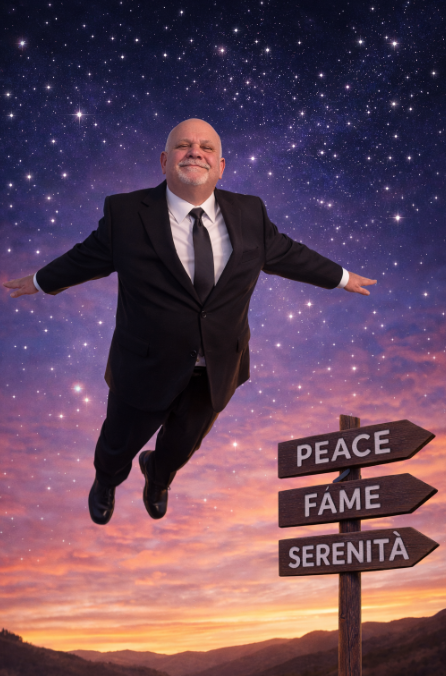
I would like to take a stroll
through the sky
to meet a few stars
big and small
and discuss three things
to see
if we can agree
once and for all:
peace, hunger, serenity
Peace to feed hunger
Feed hunger to be in peace
Be in peace to be happy
I would like
A HAT
Under a hat
the head
inside the head a brain
inside the brain…….
nothing
Two long legs
a bust with two shoulders
on the head a hat
A WALK
Turquoise sky
A long walk one afternoon
Around the streets of the town
which is neither yours nor mine
A sun hiding behind the houses
brightened slices of turquoise sky
We talking about so many things
like two friends without a care in the world.
THIN DROPS OF RAIN
Thin drops of rain are falling now
and one doesn't notice
as when daylight breaks
People walking
close to the wall
heads slightly inclined,
straight and tall
a handkerchief on their head
No umbrellas in sight
because no one thought
one could get wet
in that warm air.
THE LAST BRAY
He walked very slowly
pulling a donkey behind
halter in hand
He dragged his legs
on two hobnailed boots
as if he didn't want
to reach his grave.
The donkey kept the same pace
on four rusty irons shoes
his head always down
On the pack-saddle
a bundle of wood and one of hay
One morning they found them face to face
lying in the stable
and in the night they had heard the last bray.
DRIFTWOOD
Sitting on the beach
I look at the sea
A white bird
that I see far away
looks like a handkerchief
borne by the wind
So many thoughts
They're like driftwood
that comes and goes
riding the waves
The heart gets wet
holding a little boat
that skims very slowly.
PEOPLE'S EYES
The eyes of the day
are like those of the sea
blue, turquoise
or light brown
The eyes of the night
are black or dark brown
they're the color of ashes
when they catch the light of the moon
Like people's eyes
Maria's,
Immacolata's,
Ninetta's, Maddalena's
that turn you
into a child spellbound
by the rainbow.
REMEMBRANCE
It's a memory
a distant thought
a sweet tear
a song that stays
Like the olive tree
that I'd like to find always
wherever I might be
to keep my heart happy
and forget my troubles
OPPRESSIVE HEAT
This oppressive heat
makes sparrows weep
and cicadas laugh
and it's a good thing.
A good thing what?
That we're the only ones left
far from the commotion
from work and from everybody
It's almost a consolation!
but with this oppressive heat
I don't feel well
I almost get the impression
that my pulse has stopped
There is a need for love
When it's really so tender
your heart croons like a dove
in summer it's an icebox
and a fireplace in winter.
I Think that Love
I think that love
is a bird with golden wings,
a butterfly looking for a flower,
a soundless snowflake,
a colt,
a breeze
a poppy
an ear of wheat
a handful of stars
a flavorful thought
the moon that hides
to let the sun out
I's a song
invented moment by moment
like feelings and kisses
IF ONE MORNING
If one morning
you get up on the wrong side of the bed
because you couldn't sleep,
you're hungry
or ate too much
you had a bad dream
or have too many worries,
stand in front of the mirror,
blink your eyes
slowly at first then faster,
slap your face a little,
turn your head on your shoulders,
start to whistle or sing,
without haste,
pretending it's nothing,
and you'll see that the wrong side
will be right up again.